Jujutsu Kaisen Real Locations: Sendai’s Shopping Arcade, a Haunted Bridge & Shibuya Hikarie
Jujutsu Kaisen (呪術廻戦, dir. studios at MAPPA, 2020) splits its real-world pilgrimage map across two very different cities: Sendai, coded as protagonist Yuta Okkotsu’s hometown region, and Tokyo’s Shibuya district, which the story treats as an explicitly real, named setting — the entire climactic arc is literally titled the “Shibuya Incident.” That difference matters for how much confidence you should place in each spot below. None of these three locations comes with a formal studio press release nailing it down as “the” location, but the level of certainty ranges from “background art visually matches this exact street” to “fans matched it from a single striking building” to “the story itself names this city, and one local building happens to line up with the animated scene.”
Here’s the honest breakdown, plus everything you need to actually visit.
Hapina Nakakecho Shopping Arcade, Sendai — the arcade scene from Jujutsu Kaisen 0 Likely / Background match
What it is: A real, active covered shopping arcade in central Sendai, Miyagi Prefecture (Aoba Ward, Chuo 2-1-30). Sendai is treated in the story as the hometown region of Yuta Okkotsu, the protagonist of the Jujutsu Kaisen 0 movie, and the background art for an arcade scene in that film visually matches Hapina Nakakecho closely — the covered roof structure, the storefront rhythm, the general proportions of the street.
Confirmation level: “公式相当” (officially-adjacent), not a formal studio statement. There’s no press release or interview where MAPPA or the production committee names this arcade specifically. The case rests on Sendai being implied as Yuta’s home turf combined with a strong visual match in the animated backgrounds. Treat it as a very likely match, not a confirmed 1:1 filming reference.
How to get there: About 5 minutes on foot from JR Sendai Station, or 3 minutes from Aoba-dori Station on the JR Senseki Line. This is genuinely easy to reach — no bus transfers, no rural timetables, just a short walk from one of Tohoku’s biggest transit hubs.
Visitor etiquette: This is a working shopping arcade, not a preserved historical site — real shops and restaurants operate here every day. Don’t block storefronts for photos, don’t linger in front of an entrance while a shot sets up, and be aware that shoppers and deliveries need the same narrow walkway you’re photographing. If you want the empty-street version of the shot, an early weekday morning before shops open is a better bet than trying to clear people out of frame.
Yagiyama Bridge, Sendai — the believed model for the “Hachijuhachi Bridge” Unofficial (fan theory)
What it is: A real bridge in Taihaku Ward, Sendai, spanning the Tatsunokuchi Gorge — a genuinely steep, roughly 70-meter-deep ravine. Fans have matched this bridge’s silhouette and setting to the fictional “Hachijuhachi Bridge” that appears in the manga, based on visual comparison of the background art.
Confirmation level: non-official. This is a fan attribution, full stop. There is no studio confirmation, no official tourism tie-in, nothing beyond people lining up the drawn bridge against photos of the real one and concluding it’s a strong match. It’s a reasonable theory, but you should go in knowing it’s speculation, not fact.
Access: By bus or car from Sendai Station. Public transit here is limited compared to the arcade above — expect to check current bus timetables and then walk from the nearest stop, since there isn’t a station right at the bridge.
Important — safety and etiquette: This is the one location on this list where the safety note matters more than the photo. Yagiyama Bridge crosses a real ~70-meter gorge, and it’s locally known as a reputed “haunted spot” (心霊スポット) — a reputation that, combined with the drop and a narrow walkway, means this is not a place to treat casually. Avoid visiting at night. The walkway is narrow, there isn’t much room to maneuver around other pedestrians or a tripod, and no photo is worth losing your footing over a genuine cliff edge. If the bridge feels crowded, poorly lit, or you’re visiting alone late in the day, it’s fine to skip the shot and view the gorge from a safer vantage point instead.
Shibuya Hikarie, Tokyo — the atrium from the Shibuya Incident arc Likely / Background match
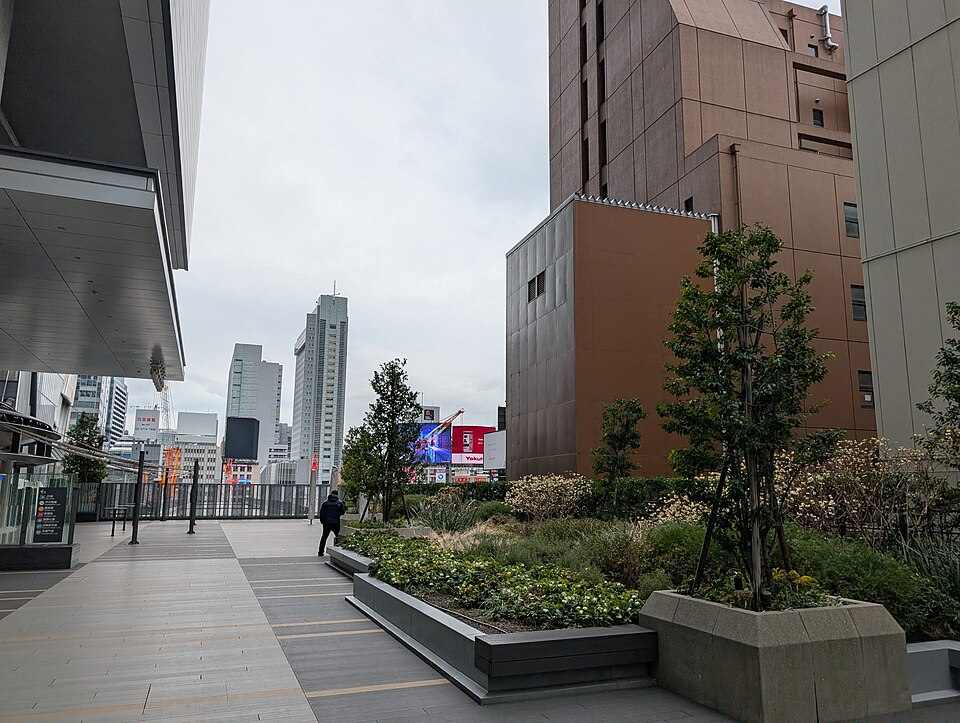 Photo: Syced, via Wikimedia Commons (CC0). Source.
.jpg)
What it is: A large commercial and cultural complex directly connected to Shibuya Station (Shibuya Ward, Shibuya 2-21-1). Unlike the Sendai spots, Shibuya itself is an explicitly real, named location within Jujutsu Kaisen — the arc where the character Gojo is trapped and the story’s stakes escalate dramatically is literally called the “Shibuya Incident” (渋谷事変). Within that arc, a scene shows Gojo descending through a multi-story atrium, and Shibuya Hikarie’s real interior atrium is a strong visual match for that sequence.
Confirmation level: “公式相当,” similar to the Sendai arcade — the setting (Shibuya) is confirmed by the story itself in the most literal way possible, but the specific building match to Hikarie’s atrium is a visual identification, not something MAPPA has confirmed by name in an interview or official guide.
How to get there: Directly connected to Shibuya Station, served by JR lines, the Keio Inokashira Line, the Tokyo Metro Ginza Line, and the Tokyu Toyoko, Denentoshi, and Hanzomon lines. This is about as easy to reach as a Tokyo location gets — you can walk in from the station concourse without going outside.
Visitor etiquette: Hikarie is a large, active commercial building with its own facility rules — expect restrictions on tripods and anything resembling a commercial photo shoot without prior permission, and check signage or ask staff if you’re unsure what’s allowed in a given area. It’s also one of the busiest buildings next to one of the busiest stations in the world, so be mindful of foot traffic, especially around escalators and the atrium void itself — this is not a spot to stop and pose in the middle of a crowd flow.
Suggested route
If you’re combining both cities into one trip:
- Sendai: Hapina Nakakecho (easy, central, pair with a Sendai Station visit) → Yagiyama Bridge (allow extra time for bus/car access, daylight hours only)
- Tokyo: Shibuya Hikarie, easily combined with any other Shibuya-area stop since it’s built into the station complex
(Lodging and tour affiliate links for Sendai and Shibuya will be added here once partner programs are active.)
FAQ
Is Jujutsu Kaisen’s setting a real place? Partly. Tokyo and Shibuya are explicitly real, named locations within the story itself — the “Shibuya Incident” arc is set in the actual Shibuya district. Sendai is more implied than stated outright, functioning as the hometown region for Yuta Okkotsu, with background art that visually matches specific real Sendai locations.
Is Hapina Nakakecho officially confirmed as a Jujutsu Kaisen location? Not by a formal studio statement. The match is considered strong because of Sendai’s role as Yuta’s hometown region combined with close visual similarity in the Jujutsu Kaisen 0 movie’s background art, but MAPPA hasn’t issued a location confirmation naming this arcade specifically.
Is Yagiyama Bridge really the Hachijuhachi Bridge from the manga? This is fan speculation based on visual matching, not a confirmed source. Treat it as a theory worth knowing about if you’re already in Sendai, not as an established fact.
Is it safe to visit Yagiyama Bridge? Visit during daylight only. It’s a real bridge over a roughly 70-meter gorge with a narrow walkway, and it carries a local reputation as a “haunted spot.” Prioritize your footing and situational awareness over getting the perfect angle.
Is Shibuya Hikarie officially confirmed as the atrium from the Shibuya Incident arc? No formal studio confirmation exists for this specific building, but the setting itself (Shibuya) is unambiguously real and named in the story, and Hikarie’s atrium is a strong visual match for the animated descent scene.
Do I need to book anything in advance for these locations? No. All three are freely accessible public spaces (an arcade, a public bridge, and a commercial building’s public atrium) — no tickets or reservations are required, though Hikarie may restrict certain photography setups.
Sources: visual comparison of Jujutsu Kaisen 0 movie background art against Hapina Nakakecho Shopping Arcade, fan-sourced visual matching of Yagiyama Bridge to the manga’s “Hachijuhachi Bridge,” and the Shibuya Incident arc’s explicit real-world Shibuya setting compared against Shibuya Hikarie’s atrium. None of these three identifications carries a formal MAPPA or production-committee confirmation naming the real-world location outright — verify current visual comparisons yourself before treating any of them as certain, and always check current access and safety conditions (especially at Yagiyama Bridge) before traveling.