Initial D Real Locations: Mt. Haruna, Mt. Akagi & Lake Haruna in Gunma
Before anything else: this guide is about visiting real mountains, not about recreating the show’s driving. Initial D (頭文字D, 1998) is built around fictional night-time mountain races on courses called “touge,” and the show is loved worldwide by car and drift fans specifically because those races look and sound incredible. But the real roads behind them are ordinary, narrow, public mountain roads in Gunma Prefecture — with real residents driving to work, real tour buses, and real police patrols. If you’re planning a visit because you love this franchise, the honest and responsible way to experience it is to see these places as a driver or passenger who follows normal traffic law, not as a stand-in for the anime’s races. We’ll explain why that matters more here than for almost any other pilgrimage article on this site.
Why this franchise needs a different kind of pilgrimage guide
Most anime pilgrimage guides deal with crowding, photo etiquette, or respecting people’s homes. Initial D pilgrimage carries an extra layer: after the anime and its manga source became popular, some fans and local drivers actually attempted to replicate the show’s drifting and high-speed cornering on these real mountain passes at night. That’s not a rumor — it became enough of a real problem that Gunma Prefectural Police and road authorities introduced physical countermeasures on the roads themselves, which we detail below for each location. Treat that history as the starting point for how you plan your trip, not as a footnote at the end.
Mt. Haruna (榛名山) — the real-world model for “Akina” Official
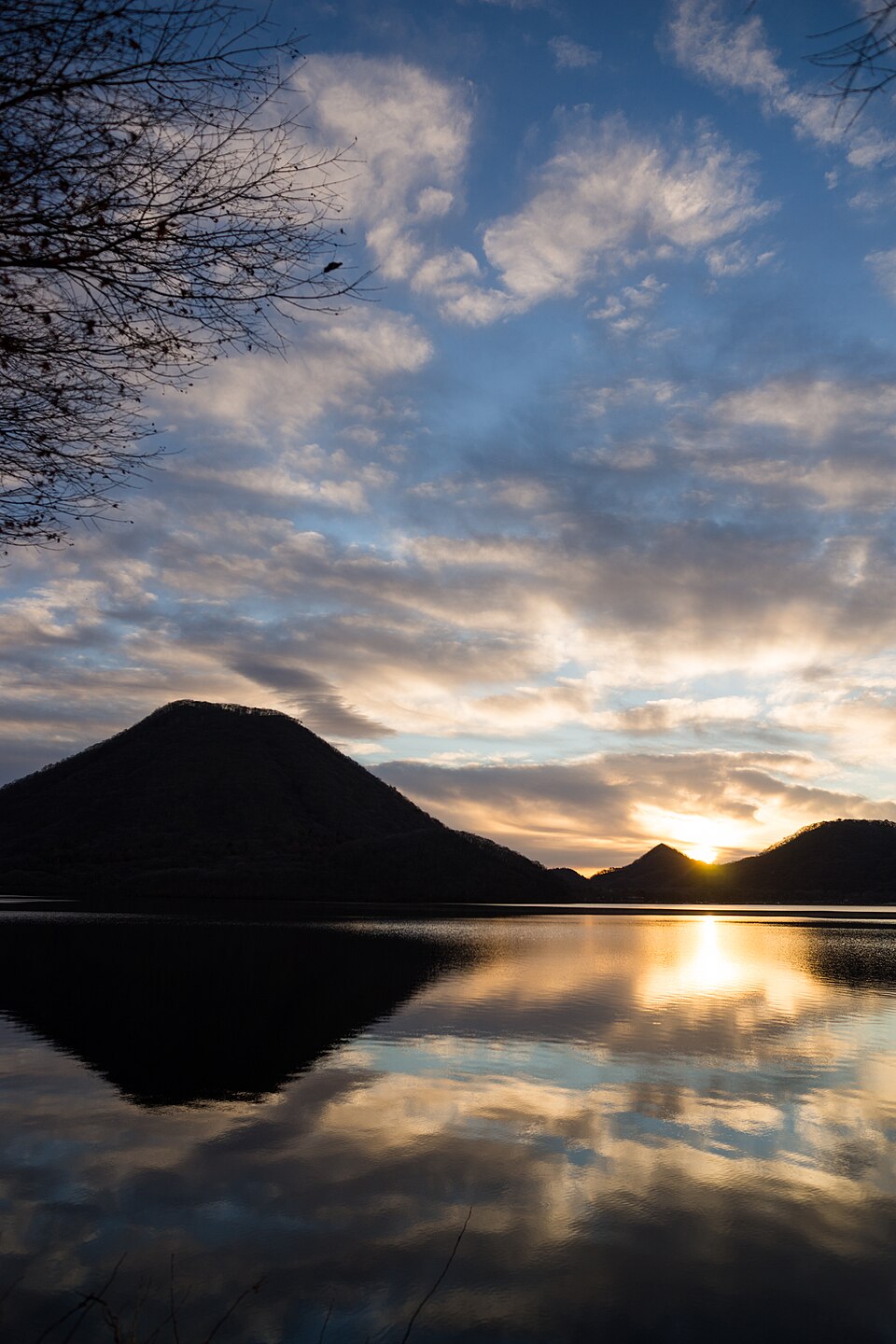 Photo: Liza Chan from Japan, via Wikimedia Commons (CC0). Source.

Location: Harunayama-machi, Takasaki City, Gunma Prefecture (36.475, 138.855)
Mt. Haruna is the mountain the author has identified as the real-world basis for Akina, the fictional home course of the series’ protagonist. It’s the touge most closely associated with the show’s opening act, and it remains the most-referenced Initial D location among international fans.
Access: From JR Shibukawa Station, take a local bus to Ikaho Onsen, then transfer to another local bus that climbs over Yaseone Pass toward Lake Haruna, passing along the lower part of the mountain. Realistically, the pass road itself — the part with the switchbacks fans want to see — is only practical to experience properly by car or motorcycle. Public buses run a fixed route and schedule and won’t stop at every famous corner.
What’s official vs. fan speculation: This one is squarely official — the author has stated directly that Mt. Haruna is the model for Akina. There’s no ambiguity to untangle here, unlike some anime pilgrimage sites where the “real” location is just a fan theory.
Etiquette and safety — please read this section in full: Mt. Haruna’s touge road is a real, narrow, two-lane public mountain road. It is used every day by Takasaki-area residents commuting, by delivery drivers, by tour buses heading to Lake Haruna, and by other tourists just like you. It is not a racetrack, and it was never built or maintained as one. Following the anime’s popularity, this road experienced a genuine problem with illegal night-time driving and drifting, particularly around its famous “5-consecutive hairpin” section. In response, road authorities applied “speed-save” surface treatments — textured pavement designed to physically discourage high-speed cornering — at several of the best-known corners. If you visit, drive or ride at normal, legal speeds, respect posted limits, and remember that the people who live along this road did not sign up to have their commute treated as a stage. Do not attempt any kind of racing, drifting, or aggressive driving here under any circumstances — it’s illegal, it endangers other road users, and it’s precisely the behavior local authorities have spent years trying to eliminate.
Mt. Akagi (赤城山) — the real-world model for “Akagi” Official
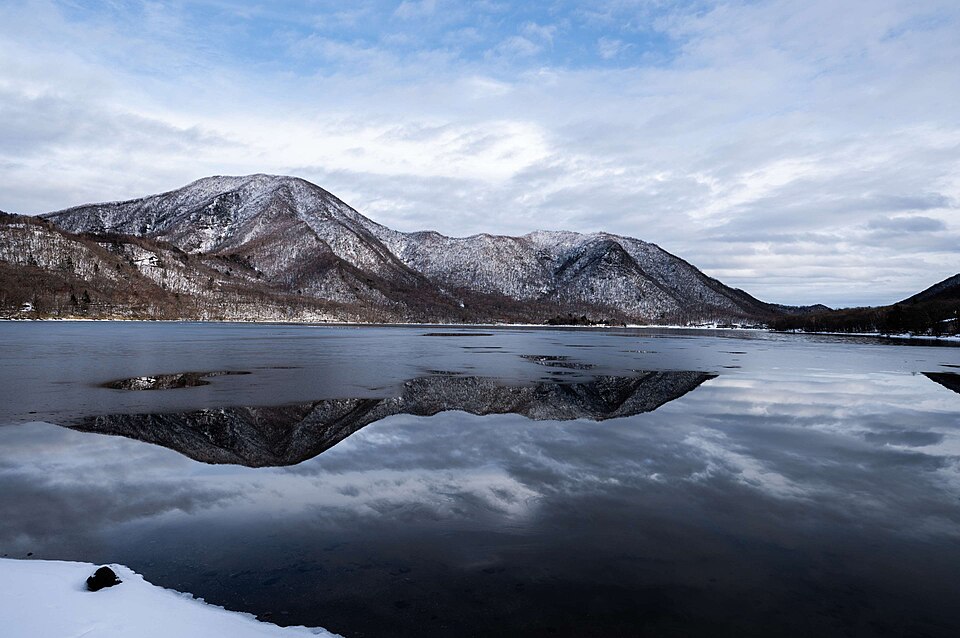 Photo: GENESIS, via Wikimedia Commons (CC BY 4.0). Source.

Location: Fujimi-machi, Maebashi City, Gunma Prefecture (36.555, 139.16)
Mt. Akagi is the confirmed real-world basis for Akagi, another of the fictional touge courses featured later in the series and closely tied to one of the show’s most prominent rival characters.
Access: Direct buses to the Akagi summit area run from JR Maebashi Station on weekends and holidays, taking roughly one hour ten minutes. Outside of those days, or if you want to explore beyond the bus’s fixed stops, a car or motorcycle is the only practical option.
What’s official vs. fan speculation: Official — the author has named Mt. Akagi directly as Akagi’s model.
Etiquette and safety: The same history applies here as at Mt. Haruna. Mt. Akagi’s mountain roads saw a real illegal-drifting problem after the anime’s popularity took off, and Gunma Prefectural Police responded by introducing the same kind of “speed-save” road surface treatments at key corners here as well. The good news, worth stating clearly: this approach has largely worked. Illegal driving on Mt. Akagi is now rarely seen compared to the show’s peak popularity years. That’s a genuine local success story, and visitors can help keep it that way simply by driving normally and legally — there is no upside, and real legal and safety risk, to doing anything else on a public mountain road shared with other people.
Lake Haruna (榛名湖) — the real-world model for “Akina Lake” Official
Location: Harunako-machi, Takasaki City, Gunma Prefecture (36.4753, 138.884)
Lake Haruna sits near the top of the Mt. Haruna touge and is the confirmed real-world model for the fictional Akina Lake that appears in the series.
Access: From the Ikaho Onsen bus terminal, a local bus runs over Yaseone Pass to Lake Haruna. As with the mountain road itself, a car is considerably more convenient if you want flexibility around the lake’s viewpoints and rest stops rather than working around a bus timetable.
What’s official vs. fan speculation: Official.
Etiquette: The roads around Lake Haruna are shared with regular sightseeing traffic — tour buses, cyclists, and families out for a lakeside walk — so this is more a matter of ordinary courteous driving than the specific illegal-racing history tied to the touge sections above. Drive carefully, park only where permitted, and give pedestrians and cyclists plenty of room on the lakeside road.
Suggested approach for an Initial D pilgrimage trip
If you’re coming from Tokyo, Gunma is reachable by Shinkansen (to Takasaki or Maebashi) followed by local transport. Because the most meaningful parts of these locations — the actual corners and viewpoints fans want to see — are genuinely hard to reach without a car, renting one in Takasaki or Maebashi is the realistic way to do this trip properly, provided you’re licensed to drive in Japan and comfortable on narrow mountain roads. If you don’t drive, you can still reach Ikaho Onsen, Lake Haruna, and the Akagi summit area by bus and get a real sense of the landscape — you’ll simply see less of the specific touge sections than a driver would.
(Lodging and tour affiliate links will be added here once partner programs are active.)
FAQ
Can I drift on Mt. Haruna like in the show? No. This is not a rhetorical “please don’t” — it’s a firm no. Drifting or racing on Mt. Haruna, Mt. Akagi, or any other public road is illegal under Japanese traffic law, dangerous to other drivers and residents, and exactly the behavior that caused Gunma authorities to install “speed-save” road treatments in the first place. There is no legal way to recreate the show’s races on these public roads.
Is there anywhere I can legally drive like the show’s characters? Not on these mountain roads. If track driving or drifting is genuinely what you’re after, that belongs at a licensed circuit or driving event, not on a public touge — those are two completely different activities and this guide only covers the latter as a pilgrimage destination, not a driving experience.
Are Mt. Haruna and Mt. Akagi officially confirmed as Initial D locations? Yes, both are official — the author has directly named them as the real-world models for the fictional Akina and Akagi mountains, respectively. Lake Haruna is likewise the confirmed model for the fictional Akina Lake.
Do I need a car to visit these locations? Not strictly, but it helps enormously. Buses reach the general areas (Ikaho Onsen, Lake Haruna, the Akagi summit on weekends/holidays), but the specific touge corners fans want to see are mostly only accessible by car or motorcycle at a normal, legal pace.
Has the illegal driving problem at these locations actually stopped? Largely, yes, especially at Mt. Akagi, where illegal drifting is now rarely seen following the police’s road-surface interventions. That’s a real improvement worth respecting by continuing to drive legally when you visit.
What time of year is best to visit? These are exposed mountain roads in Gunma, so winter can bring snow and ice, particularly at higher elevations near Lake Haruna and the Akagi summit. Spring through autumn is generally the more straightforward window for casual visitors; check current road conditions before a winter trip regardless of your mode of transport.
Sources: the author’s own public statements identifying Mt. Haruna, Mt. Akagi, and Lake Haruna as the real-world models for Akina, Akagi, and Akina Lake; Japanese-language reporting on Gunma Prefectural Police’s road-surface countermeasures against illegal drifting following the anime’s popularity. Verify current bus schedules, road conditions, and any local traffic restrictions directly before traveling, as these can change seasonally.