Demon Slayer (Kimetsu no Yaiba) Real Locations Guide
Demon Slayer: Kimetsu no Yaiba (鬼滅の刃, dir. Haruo Sotozaki, studio ufotable, 2019) turned Koyoharu Gotouge’s manga into one of the highest-grossing anime franchises in the world. It’s also a good case study in why “anime pilgrimage” guides need to be read carefully — because the real-world sites tied to this series are a genuine mix. One is explicitly confirmed by the official fanbook. The other two are popular, well-established fan theories that the author and Shueisha/ufotable have never confirmed. All three get treated as must-visit pilgrimage spots online, often without that distinction being made clear.
This guide keeps the two categories separate the whole way through, so you know exactly what you’re visiting and why.
Houman-gu Kamado Shrine — the name coincidence that became a pilgrimage site Unofficial (fan theory)
Status: non-official. This one is fan attribution, full stop — and it’s worth being upfront about why it caught on. Houman-gu Kamado Shrine (宝満宮竈門神社) sits on Mt. Homan in Dazaifu, Fukuoka Prefecture, and its name contains the characters for “Kamado” (竈門) — which is also the surname of the series’ protagonist, Tanjiro Kamado, and his sister Nezuko. That’s the entire basis for the connection. There is no statement from Koyoharu Gotouge, Shueisha, or ufotable linking this shrine to the story, no shared imagery, and no production reference cited anywhere official.
That hasn’t stopped it from becoming one of the most visited “Demon Slayer shrines” in Japan, and the shrine itself has leaned into the attention with Demon Slayer-adjacent goods and a steady stream of fan visitors. It’s a legitimate, centuries-old Shinto shrine in its own right — dedicated to Tamayori-hime and associated with match-making and protection — so it’s worth a visit on its own merits even setting the anime connection aside. Just don’t go in expecting confirmed “canon” ties, because they don’t exist.
Access: Located at Uchiyama 883, Dazaifu City, Fukuoka Prefecture. From Nishitetsu Dazaifu Station, it’s about a 5-minute drive, or you can take the Dazaifu community bus (“Mahoroba-go,” Uchiyama line) to the “Uchiyama (Kamado Shrine-mae)” stop, followed by roughly a 3-minute walk.
Etiquette: This is an active, working shrine, not a themed attraction — follow normal shrine visiting etiquette (bow at the torii, use the purification basin before approaching the main hall, keep noise down near worshippers). Avoid photographing people during active prayer or ceremony, and be especially considerate around the main hall if a wedding or ritual is in progress.
Mt. Kumotori — the officially confirmed birthplace of Tanjiro and Nezuko Official
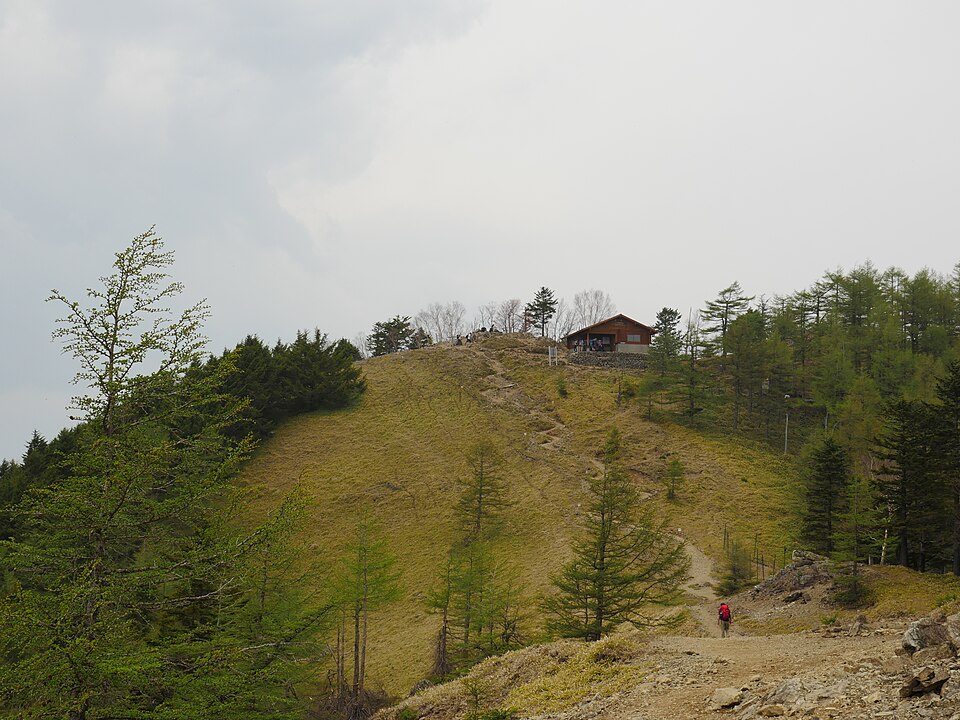 Photo: Rambalac, via Wikimedia Commons (CC BY-SA 3.0). Source.

Status: officially confirmed. This is the one location in this guide you can state with confidence, because the connection comes directly from the source material rather than fan pattern-matching. The official Kimetsu no Yaiba fanbook explicitly names the area around Mt. Kumotori (雲取山) as the hometown and birthplace of Tanjiro and Nezuko Kamado.
Mt. Kumotori sits at the meeting point of Tokyo, Saitama, and Yamanashi prefectures, spanning the Okutama area of western Tokyo and the Chichibu area of Saitama. At 2,017 meters, it’s the highest point in Tokyo Metropolis — which already tells you this isn’t a casual sightseeing stop. It’s a real mountain summit reachable only by hiking, with the kind of remote, forested, snow-capable terrain that fits the story’s early chapters, where Tanjiro descends from an isolated mountain village to sell charcoal in town.
Access: This requires genuine mountain hiking experience, not a walk-up visit. The summit is roughly 5+ hours one-way on foot, typically approached either via Mitsumine Shrine on the Chichibu (Saitama) side or from trailheads on the Okutama side. There’s no shortcut, cable car, or drivable road to the top.
Etiquette and safety — read this before you plan anything: Mt. Kumotori is a serious mountain, not a scenic overlook. Attempting the hike without proper gear (real hiking boots, layered clothing, sufficient water, a map or GPS, and a start time that gets you back before dark) is genuinely dangerous, and conditions can shift fast at elevation even outside winter. Stay on marked trails only — this is standard mountain safety advice everywhere, but it matters even more here because the terrain, weather, and distance don’t forgive improvisation. If you don’t have hiking experience, this is not the place to start just because of an anime connection.
Ashikaga Flower Park — the likely model for the wisteria imagery Unofficial (fan theory)
Status: non-official. Wisteria flowers (fuji no hana, 藤の花) are a recurring and thematically important image in Demon Slayer — wisteria is used as a ward against demons throughout the story, most memorably tied to the Wisteria Family Crest households that shelter Demon Slayer Corps members. Ashikaga Flower Park (あしかがフラワーパーク) in Tochigi Prefecture is the real-world site most commonly pointed to as the visual inspiration, thanks to its enormous, world-famous wisteria displays — including the “Great Wisteria,” a single tree over 150 years old with a canopy spanning roughly 1,000 square meters.
As with Kamado Shrine, this is a fan attribution rather than a studio-confirmed reference. ufotable and Koyoharu Gotouge have not named this specific park as a design source. The comparison persists because the park’s wisteria tunnels genuinely resemble the kind of dense, glowing floral imagery used in the anime’s demon-repelling scenes, and because it’s one of the most famous wisteria destinations in the country — so it’s an easy visual match for fans to make, even without official backing.
Access: Located at Hazama-cho 607, Ashikaga City, Tochigi Prefecture. It’s about a 3-minute walk from JR Ryomo Line’s “Ashikaga Flower Park Station,” which makes this by far the easiest of the three locations to reach.
Etiquette: This is a paid garden, and it gets extremely crowded during peak wisteria bloom, roughly mid-April through mid-May — expect real crowd-control conditions on weekends. Avoid setting up tripods or long photo sessions that block the walking paths; keep photo stops brief so other visitors can move through. Don’t touch or pull on the flowers or branches, including for photos — the vines and blossoms are fragile and the older trees are actively maintained specimens, not just backdrop.
Planning a visit: know before you go
These three sites aren’t naturally combinable into one trip — Fukuoka, the Tokyo/Saitama/Yamanashi mountain border, and Tochigi are all in different parts of Japan, hours apart from each other. Treat this as three separate regional add-ons rather than a single pilgrimage route:
- Kamado Shrine pairs naturally with a Fukuoka/Dazaifu trip, alongside Dazaifu Tenmangu and the area’s other well-known shrines
- Mt. Kumotori is a standalone hiking trip for people who already hike — build a full day (or an overnight with a mountain hut) around it, not a side excursion
- Ashikaga Flower Park works well as a day trip from Tokyo during wisteria season, but book around the bloom calendar since the display window is short and weather-dependent
(Lodging and tour affiliate links for these regions will be added here once the relevant partner programs are active.)
FAQ
Is Kamado Shrine really connected to Demon Slayer? Not officially. The connection is based entirely on the shrine’s name sharing the “Kamado” characters with protagonist Tanjiro Kamado’s surname. Neither the author, Shueisha, nor ufotable has confirmed any link. It’s a fan-driven pilgrimage site, not a canon location.
Is Mt. Kumotori confirmed as Tanjiro’s hometown? Yes — this is the one location in this guide that’s officially confirmed. The Kimetsu no Yaiba fanbook explicitly names the Mt. Kumotori area as the birthplace of Tanjiro and Nezuko Kamado.
Can I hike Mt. Kumotori as a beginner? Not safely, no. It’s a real 2,017-meter mountain requiring 5+ hours of hiking one-way with proper gear and experience. This is not a casual walk, and underprepared attempts are genuinely risky. If you’re not an experienced hiker, this location isn’t accessible to you without building that experience first.
Is Ashikaga Flower Park officially the inspiration for the wisteria scenes? No — it’s a popular fan attribution based on the park’s famous wisteria displays matching the story’s demon-repelling wisteria imagery. It hasn’t been confirmed by the studio or the author.
Which of these three locations is the safest bet to visit? Ashikaga Flower Park is by far the easiest and most accessible — a 3-minute walk from its own train station. Kamado Shrine requires a short bus or car ride from Dazaifu. Mt. Kumotori is a serious commitment that should only be attempted by prepared hikers.
Why do some Demon Slayer location guides treat all three as equally “confirmed”? Because pilgrimage content online often blurs the line between official statements and fan theories that have been repeated so often they start to read as fact. This guide separates them deliberately: Mt. Kumotori has a direct citation in the official fanbook, while Kamado Shrine and Ashikaga Flower Park do not.
Sources: the official Kimetsu no Yaiba fanbook (for the Mt. Kumotori hometown confirmation), general knowledge of Houman-gu Kamado Shrine’s name and location, and widely reported fan commentary connecting Ashikaga Flower Park’s wisteria displays to the series’ imagery. No web research was conducted for this article — verify current shrine access details, park opening hours and bloom-season dates, and mountain trail conditions directly before traveling, since all three can change seasonally.